IHC Session Highlights Sikhism's Inclusivity as Punjab's Enduring Gift to Humanity
Aug 13, 2026
VMPL
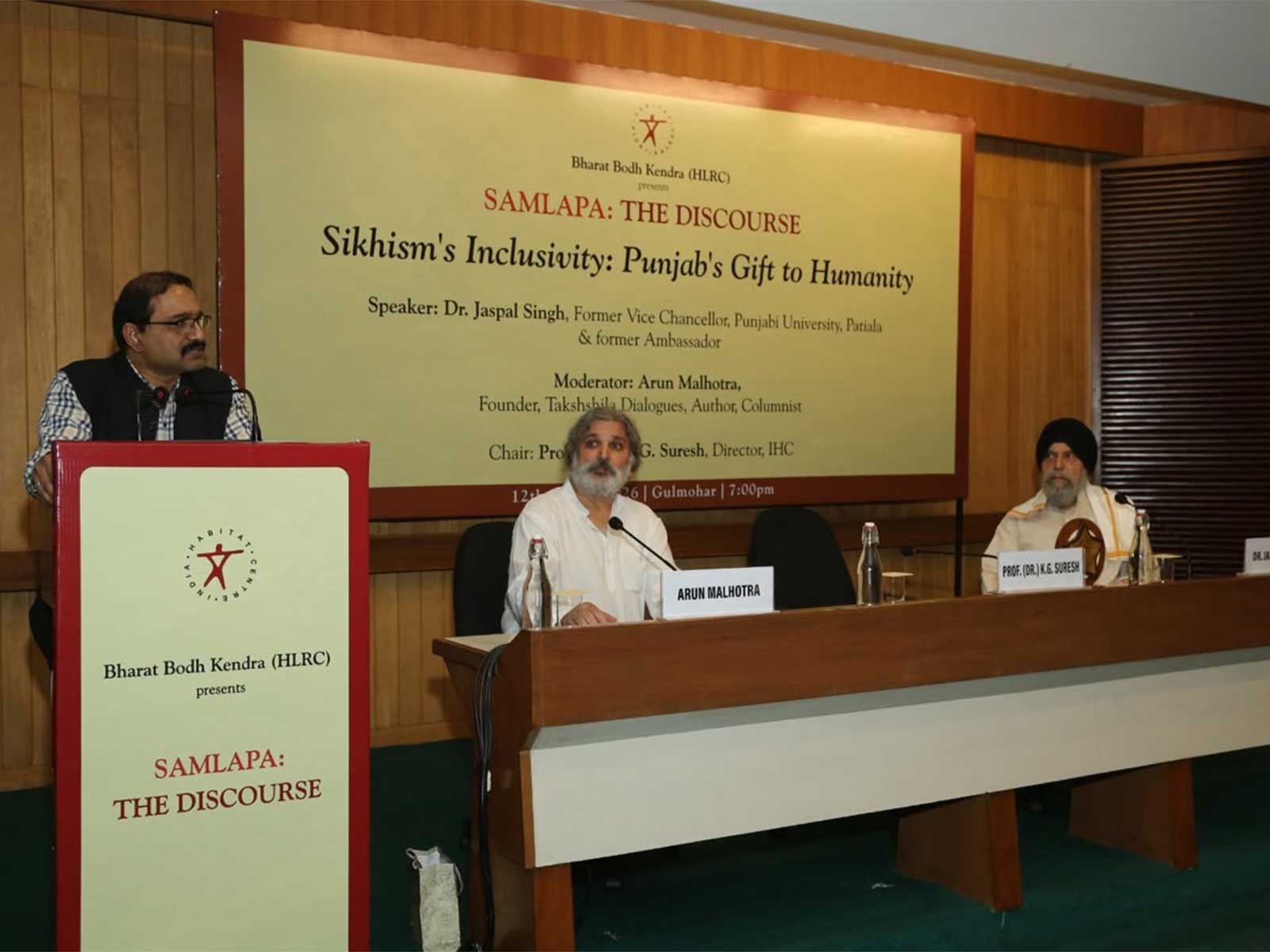
New Delhi [India], August 13: A thought-provoking session titled "Sikhism's Inclusivity: Punjab's Gift to Humanity" was held on Wednesday under the Bharat Bodh Kendra Dialogue Series SAMLAPA.
The discussion explored Punjab's profound spiritual, literary, and civilisational legacy, examining how the region's traditions of devotional exchange, intellectual openness, cultural plurality, and steadfast resistance to religious coercion have shaped a distinctive ethos of inclusivity across centuries.
Professor K. G. Suresh, Director, India Habitat Centre, chaired the session. He noted that arriving at a theme of such depth required careful deliberation to identify a subject of contemporary relevance worthy of serious public engagement. Welcoming the conversation on Sikhism's message of inclusivity, he described it as deeply rooted in Punjab's historical resilience against religious persecution and coercive conversion.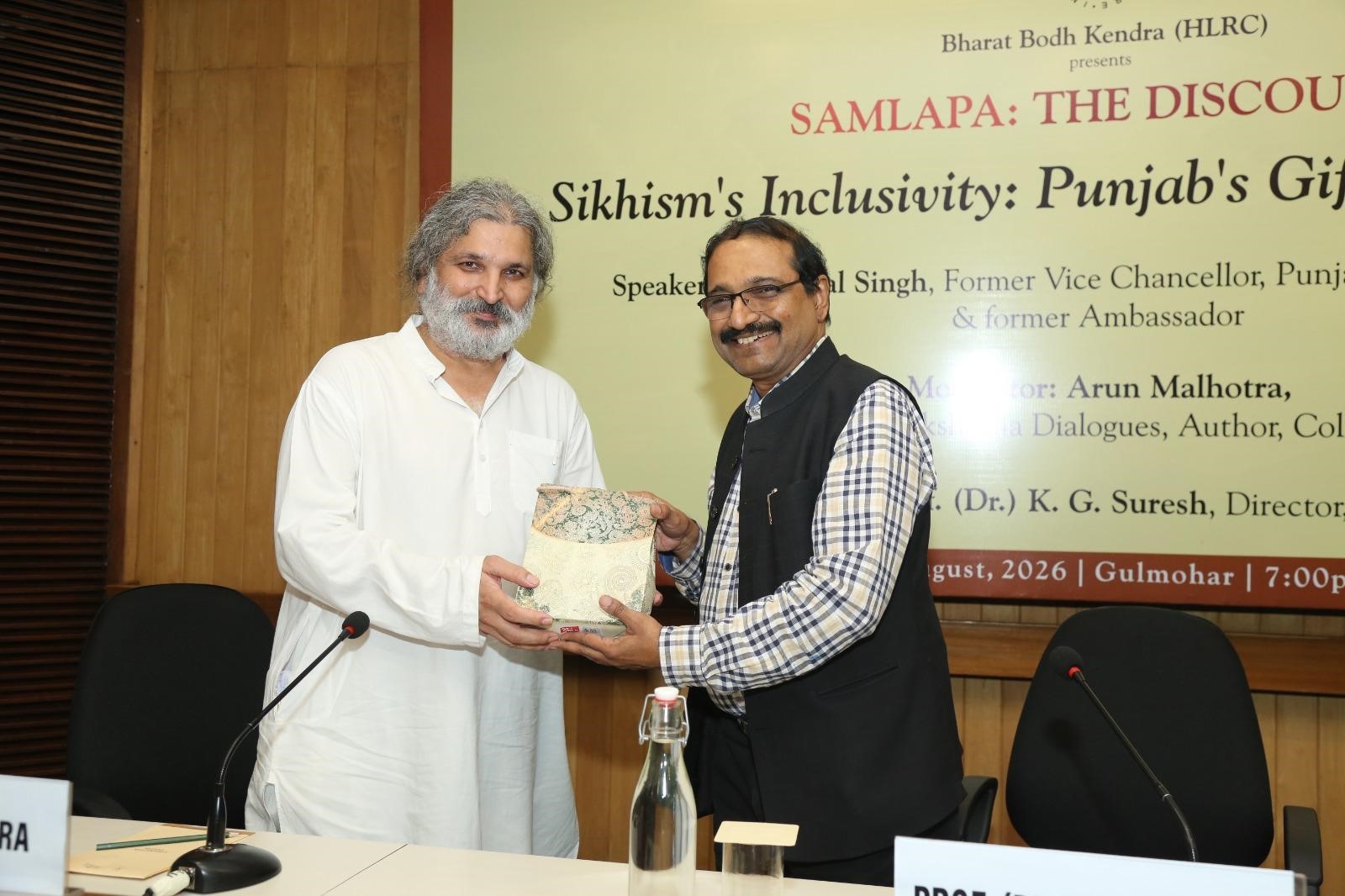
Dr Jaspal Singh, former Vice-Chancellor of Punjabi University, spoke on the multivocal, multilingual, and multicultural character of the Gurbani preserved in the Sri Guru Granth Sahib. He highlighted the compositions of Baba Sheikh Farid, Bhagat Kabir, Bhagat Namdev, and Bhagat Trilochan, among others. The Sri Guru Granth Sahib incorporates the writings of the Sikh Gurus alongside those of 15 Bhagats, reflecting a broad and inclusive spiritual vision.
Dr Singh emphasised that this Gurbani tradition brings together diverse devotional voices and affirms a collective search for truth that transcends rigid distinctions of caste, creed, language, and social identity. Special attention was given to Baba Sheikh Farid, whose verses rank among the earliest and most influential devotional compositions in Punjabi literary history. His baani--comprising hymns and saloks in the Guru Granth Sahib--continues to occupy a lasting place in the Sikh spiritual tradition and in the wider cultural memory of Punjab.
Dr Singh also recited and discussed works by poets and thinkers beyond the Guru Granth Sahib, including Allama Muhammad Iqbal, Dhani Ram Chatrik, Nazeer Akbarabadi, and Maithili Sharan Gupt, situating their contributions within the broader literary and intellectual universe of Punjab and the subcontinent.
Arun Malhotra, Founder of Takshshila Dialogues and moderator of the session, presented a connected civilisational perspective on Sapta Sindhu and Punjab. He placed the region within a long historical continuum linked to early sacred geography, the intellectual significance of Takshashila, and Punjab's role in the preservation, transmission, and defence of collective culture. 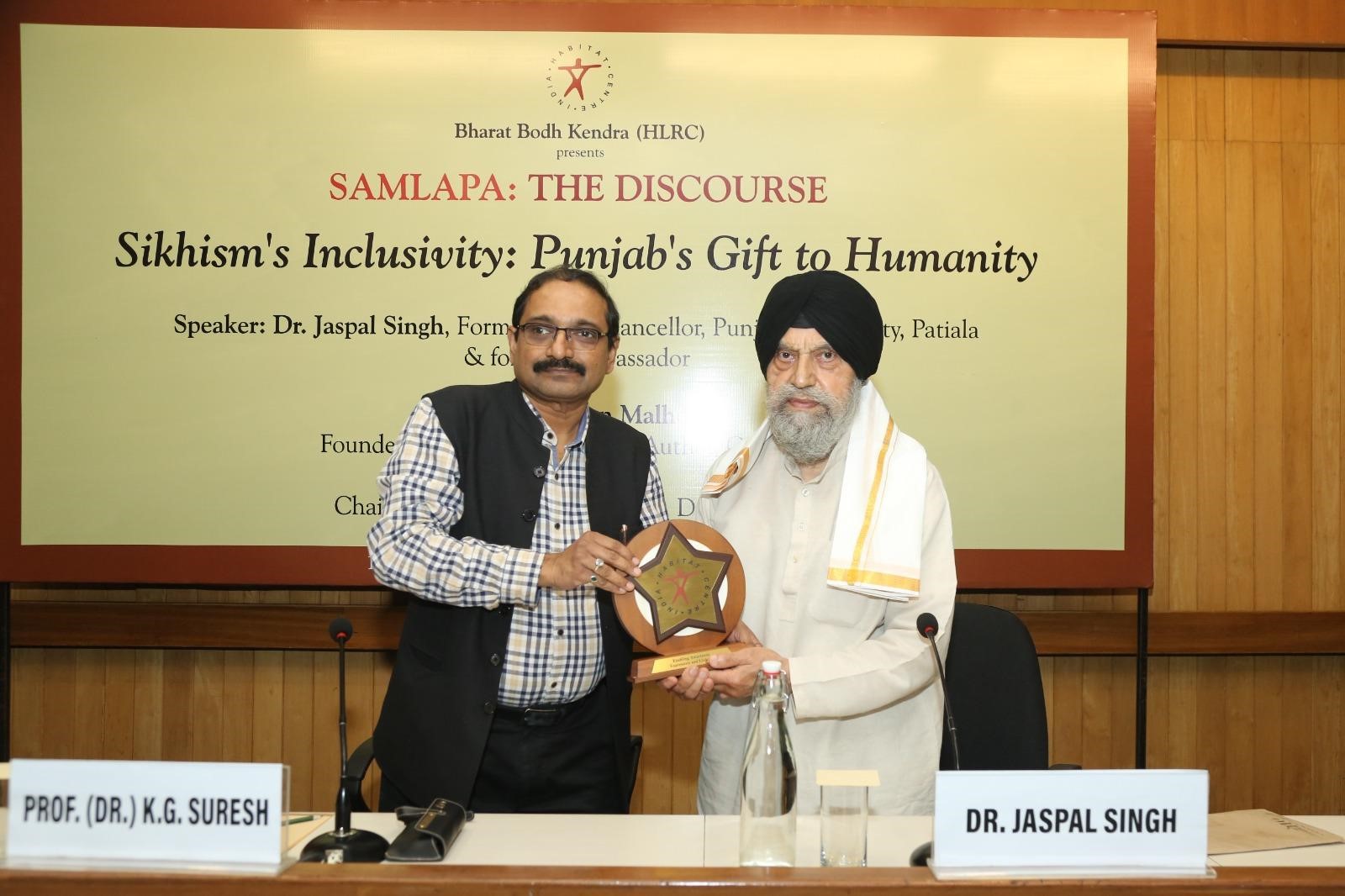
His presentation revisited key historical episodes--including Alexander's campaign in 326 BCE and the memory of Porus, the struggle of Raja Dahir of Sindh against the Umayyad invasion, the Hindushahi dynasty, the meeting of early Islam and the Bhakti movements, the legacy of Sikh warriors, and Maharaja Ranjit Singh's inclusive regime--framing them as part of Punjab and Sindh's enduring record of cultural resilience, political contestation, and the defence of regional autonomy.
The session further underscored the role of the Sikh Gurus in upholding religious freedom and the dignity of conscience. Sikh history was presented as a living example of courage, pluralism, and moral responsibility in the face of coercion.The event concluded with a collective call to preserve, protect, and continue deep enquiry into this continuum of inclusivity as the shared cultural inheritance of the region.
By bringing together scripture, poetry, history, and civilisational memory, the dialogue reaffirmed Punjab's central place in the subcontinent's long-standing traditions of inclusivity and highlighted Sikhism's continuing relevance as Punjab's enduring gift to humanity.
(ADVERTORIAL DISCLAIMER: The above press release has been provided by VMPL. ANI will not be responsible in any way for the content of the same.)